
Local SEO in Raleigh and the Triangle: where to start
A business in Raleigh can have a good-looking website and still be difficult for nearby customers to discover. Local SEO connects what you do, where you work, and the information people need to choose you. The best starting point is a clear, accurate foundation across your website and business profile.
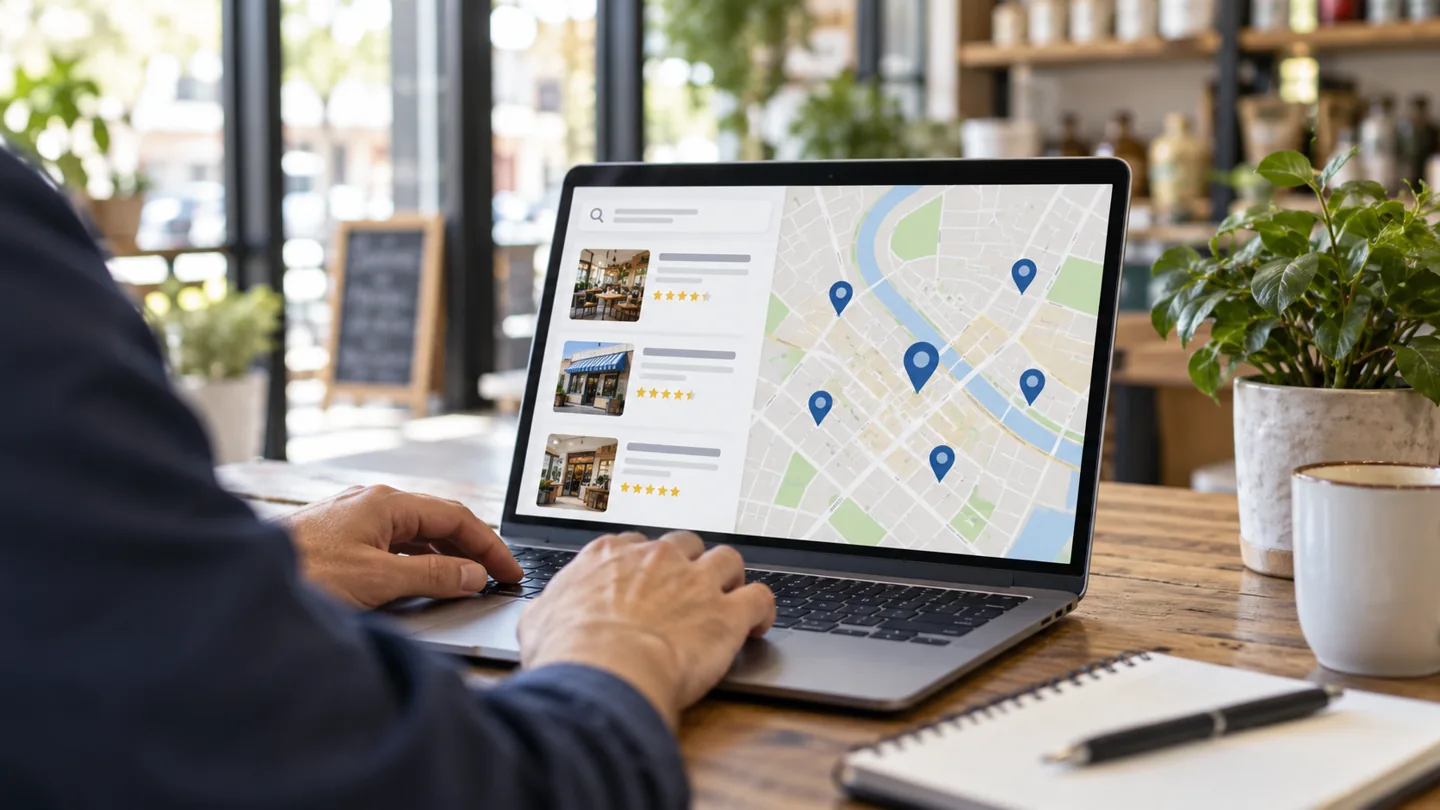
Understand the map results and website results
Google may show a map with business listings as well as links to individual websites. Your Google Business Profile and your website play different roles. A profile helps people check details and get in touch; a service page can explain an offering in more depth.
Google describes local ranking in terms of relevance, distance, and prominence. That means good content and a complete profile matter, but distance from a searcher is not something an agency can simply optimize away. Do not treat a city listed on your website as a promise of map visibility there.
Start with an accurate, eligible business profile
If your business qualifies for a Google Business Profile, use its real name and the category that best describes its main activity. Keep the phone number, website link, hours, services, and business details accurate. Add genuine photos that help someone understand the business.
Google’s eligibility rules distinguish customer-facing locations, service-area businesses, and online-only businesses. Check those rules before creating a listing. Do not use a virtual office to imply a staffed local location or add search phrases to the business name when they are not part of its real name.
For eligible service-area businesses, describe the places you actually travel to. Adding every Triangle community does not create an office in each town or guarantee rankings across the region.
Build useful pages around your actual services
Make important services understandable on your website. Explain the work, common customer questions, the process, and the next step. Mention Raleigh or nearby communities where it helps someone determine whether you can serve them.
For example, a business serving both Raleigh and Durham can describe its coverage clearly and share relevant project examples. Copying the same page for every town and swapping the city name gives readers little additional value. Separate pages should have a real reason to exist.
Use descriptive page titles and headings, and link related information together. Our small-business website checklist covers the underlying site structure.
Let real customer experience support your reputation
Make it straightforward for customers to leave honest feedback after a completed service. Do not offer discounts or other incentives for reviews, and do not ask only customers you expect to leave positive feedback. Respond professionally and avoid publishing private customer information.
Keep your profile current with useful photos and business updates. A post can help someone understand an offer or recent project; posting on a fixed schedule alone is not a ranking guarantee. Accuracy and usefulness should guide what you share.
Keep your public business information consistent
Check the website and relevant listings for old phone numbers, conflicting hours, and outdated service descriptions. Correct the places a customer might actually encounter. A listing in a credible local or industry directory can also help people discover you.
Choose legitimate relationships and resources over buying large volumes of links. Share helpful content with your audience, participate in appropriate local business networks, and make your website worth recommending.
Measure discovery and inquiries together
Google Search Console can show which searches bring impressions and clicks to your website. When analytics and inquiry tracking are configured, they can help connect visits with form submissions or other contact actions. A position report alone does not tell you whether the business is getting useful opportunities.
Establish a baseline, record the improvements made, and review trends over time. Compare the services and locations generating relevant interest. Rankings fluctuate, and new pages may take time to be discovered and indexed.
Choose a manageable set of priorities
Begin with correct business details, working contact paths, and a few strong service pages. Then improve content and your profile around the gaps you find. Trying to target every service in every city at once can make it harder to produce useful work.
RULA’s SEO Growth add-on is available with Managed Hosting or Website Care for $499/month, with no additional setup fee. It provides local SEO and Google Business Profile management; website hosting, maintenance, and general revisions follow your separate website plan. If you are comparing approaches for your small business, share your services and target areas so we can discuss a suitable scope.